
Child Chipped a Permanent Tooth: What Should You Do?
If your child chipped a permanent tooth, have them stop the activity, rinse the mouth gently with clean water, apply a cold compress outside the face if swelling is present, and look for the broken piece.
Store any fragment safely and call a dentist promptly. A small chip may need smoothing or bonding, while a deeper break can affect the inner tooth and require urgent treatment.
Do not use glue or attempt a home repair.
Call About a Chipped Tooth
Is a Chipped Permanent Tooth in a Child an Emergency?
It needs prompt dental advice. Urgency depends on pain, bleeding, tooth movement, swelling and how much tooth is missing. A dentist should examine the tooth even if the child feels little pain because cracks or pulp exposure may not be obvious at home.
First Steps for a Parent or Caregiver
Help the child stay calm and avoid further impact. If there are signs of a medical emergency, get medical help first rather than delaying care to look for a tooth fragment.
Only have the child rinse if they are awake, alert and able to do so safely. Do not repeatedly wiggle or test the injured tooth.
- Help the child stay calm and stop the activity.
- Check whether the tooth is chipped, loose, displaced or completely knocked out.
- Rinse gently with clean water if the child can do so safely.
- Use a cold compress wrapped in a cloth outside the face for swelling.
- Find the tooth fragment if possible and handle it carefully.
- Call the dental office and describe the injury.
- Follow the dentist’s instructions about timing and fragment storage.
Confirm Whether It Is a Baby or Permanent Tooth
Treatment differs between primary and permanent teeth. Front permanent teeth commonly begin appearing around age six or seven, but eruption timing varies. Age alone may not tell you which tooth was injured.
If you are unsure, tell the dental office the child’s age and tooth position. Do not attempt to reinsert a completely knocked-out baby tooth.
When the Injury Needs Urgent Attention
Call a dentist promptly after a permanent-tooth chip. Describe any of the following signs so the team can advise how urgently the child needs to be seen.
Medical Emergencies Come First
For a significant head injury, loss of consciousness, breathing difficulty or another medical emergency, call 911 or seek emergency medical care immediately. Do not wait for a dental callback. The dental team handles the tooth, but broader injury may require medical assessment.
A Large Piece Is Missing
A substantial part of the tooth has broken away.
Strong or Increasing Pain
The child reports strong pain or discomfort that is getting worse.
Tooth Movement
The tooth is loose or has moved from its usual position.
An Exposed Centre
The centre of the broken tooth appears exposed. Do not probe it.
Bleeding That Persists
Bleeding does not settle with gentle pressure. Heavy uncontrolled bleeding needs emergency medical care.
Swelling
Swelling develops around the injured area or face.
A Changed Bite
The upper and lower teeth no longer meet normally.
Head or Facial Injury
There was also a blow to the head or face. Tell the dental team and seek medical advice when needed.
For urgent tooth-related contact guidance, review the clinic’s emergency information. A routine online message is not a substitute for prompt advice after a concerning injury.
Emergency Dental CareWhat Information to Give the Dental Office
When you call about a dental injury in a child, a clear description helps the office advise on the next step. Share what you know without delaying the call to collect every detail.
Be ready to explain:
- The child’s age
- Whether the tooth is permanent, if known
- When the injury occurred
- How it happened
- Whether a fragment was found
- Pain, bleeding, swelling or tooth movement
- Whether the bite feels different
- Any relevant health conditions or medication
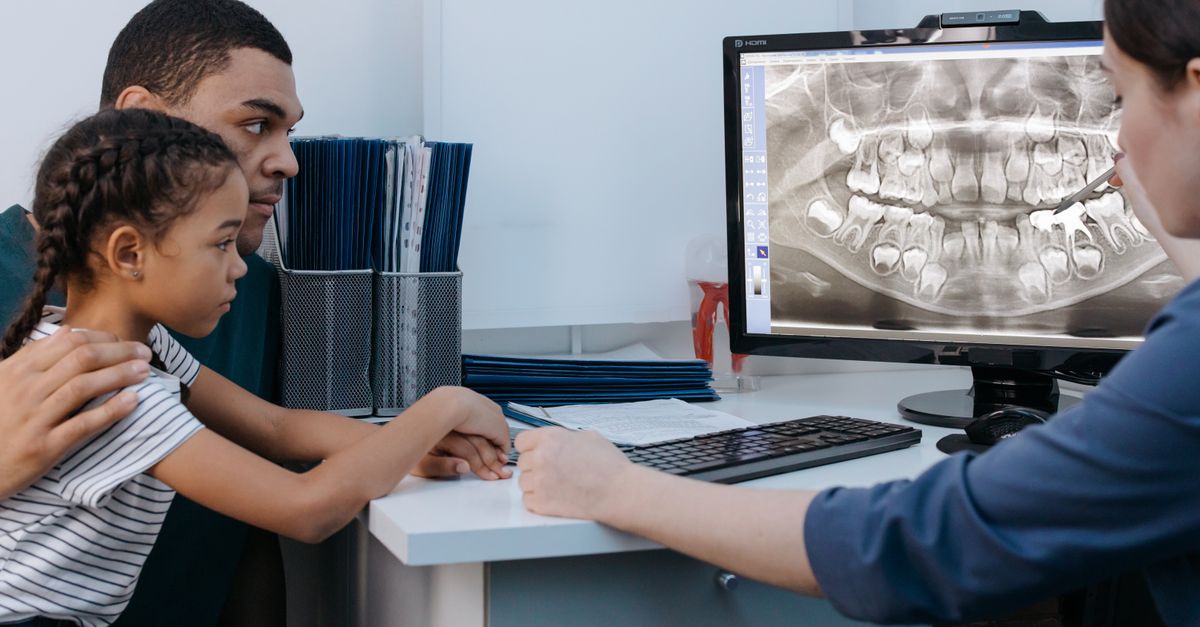
How a Dentist Assesses a Chipped Tooth
The dentist assesses the injured tooth and nearby tissues, using an approach suitable for the child’s age and tooth development. Learn more about children’s dental care.
- Look at the size and depth of the chip
- Check whether the tooth is loose or displaced
- Assess neighbouring teeth and soft tissues
- Test sensitivity or pulp response when appropriate
- Check the bite
- Take dental images if clinically indicated
- Plan follow-up because changes can appear later
Possible Repair Options
A small enamel chip and a deeper break do not need the same care. Treatment depends on the injury, remaining tooth structure, root development, pulp health and bite.
The American Association of Endodontists notes that many chipped teeth can be repaired by reattaching the fragment, bonding tooth-coloured material or placing a crown, depending on the injury.
Smoothing a Small Enamel Edge
A very small rough area may only need conservative smoothing by a dentist and monitoring.
Reattaching the Fragment
In suitable cases, the natural fragment may be bonded back. Bring it even if you are unsure whether it can be used.
Composite Bonding
Tooth-coloured resin may rebuild a selected chip. Read about composite bonding in Regina.
Protective Pulp Treatment or Root Canal Care
Deeper injury can affect the pulp. Root development, exposure, symptoms and vitality guide age-specific treatment or referral.
Crown or Other Restoration
More extensive loss may require broader restoration after the tooth is stabilized and assessed.
Why Follow-Up Matters
A tooth can look stable after repair but change later. Follow-up lets the dentist compare the tooth and surrounding tissues over time.
Tooth Colour
A change in colour may need assessment even if the tooth does not hurt.
New Sensitivity or Pain
Report discomfort that starts, returns or becomes stronger after the injury.
Pulp Vitality
The dentist may reassess how the inner tooth is responding as time passes.
Root Development
A young permanent tooth may need monitoring while its root continues developing.
Gum or Bone Changes
The team may review the tissues around the injured tooth and take images when indicated.
Restoration Condition
The repair is checked for changes in its surface, fit and function.
Preventing Another Sports-Related Chip
No product prevents every injury, but an appropriate sports mouthguard can reduce risk. The guard should fit securely and be replaced as the child grows or teeth change.
Use the night guard versus sports mouthguard guide to understand why an athletic guard is different from a sleep appliance.
Frequently Asked Questions
Should I save the broken tooth piece?
Yes. Store it as the dental office directs and bring it to the appointment. It may or may not be reusable. Keep it in a clean container, not in the child’s mouth, and do not delay urgent care to search for it.
What if my child has no pain?
The tooth should still be assessed. The depth of injury and pulp response are not always clear from symptoms alone.
Can a child’s front tooth be bonded?
Often, selected chips can be rebuilt with composite resin. The dentist must assess the injury, bite and root development before recommending a repair.
What if the tooth turns darker later?
Contact the dentist. Colour change can indicate internal changes and should be evaluated, even if the child is not in pain.
Is a chipped tooth the same as a knocked-out tooth?
No. A chip removes part of the crown, while a knocked-out tooth has completely left its socket. The emergency instructions differ. Do not reinsert a knocked-out baby tooth; seek immediate dental advice for a knocked-out permanent tooth.
Can the child return to sports immediately?
Ask the treating dentist. Timing depends on the injury, repair and risk of another impact. Follow any medical restrictions as well if there was a head or facial injury.
Authoritative Dental Health Resources
- American Association of Endodontists: Cracked Teeth and Chipped Teeth
- American Academy of Pediatric Dentistry: Dental Trauma Resources
These resources provide general education. The AAPD resource presents the IADT guideline for fractures and luxations of permanent teeth. Your child’s injury needs an individual assessment; follow the treating dentist’s instructions for care and follow-up.
Have the Injury Assessed, Even If It Looks Small
For a recent injury, review chipped and broken tooth repair in Regina and contact Downtown Dental Centre promptly. An examination can help determine the depth of the chip, appropriate treatment and follow-up.
Chipped and Broken Tooth Repair in Regina