Confirm the Treatment
The tooth and proposed restorative care are confirmed before treatment begins.

Dental fillings repair teeth affected by cavities or selected types of damage. The dentist removes decay where needed and places a suitable restorative material to rebuild the tooth’s shape and function. An examination at Downtown Dental Centre determines whether a filling is appropriate or whether the tooth needs another type of care. Tooth sensitivity by itself does not confirm that you need a filling.
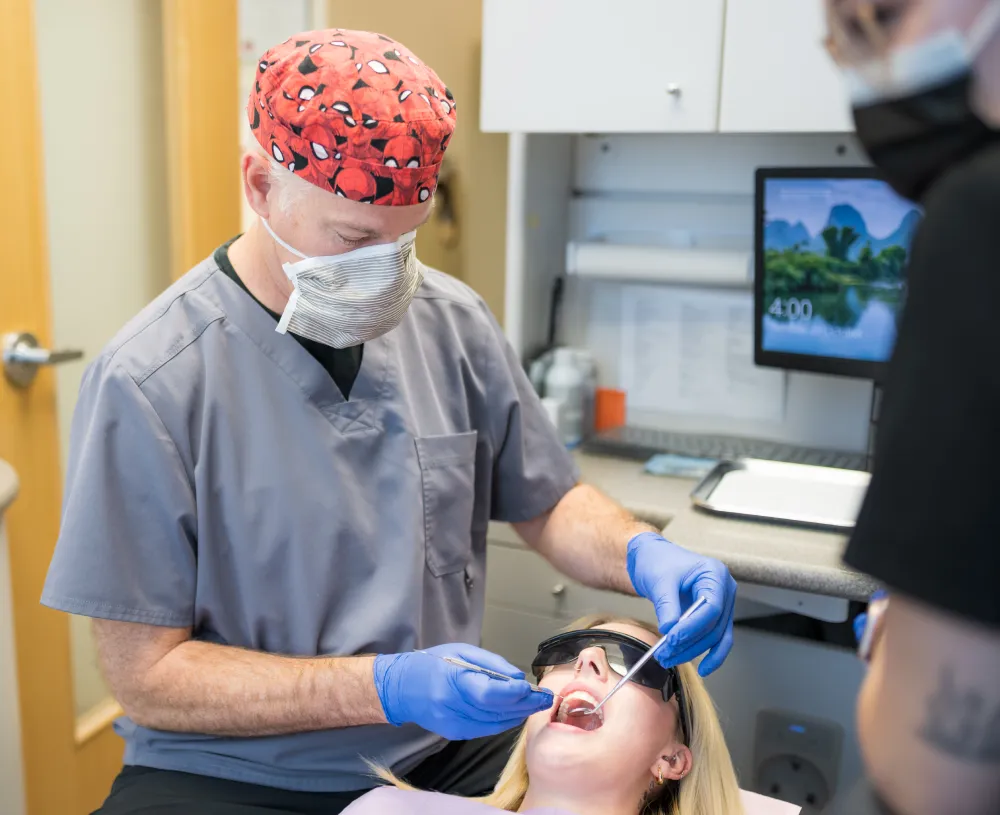
A filling may be recommended for an established cavity, a damaged area of tooth structure or an existing restoration that no longer functions properly. Cavities can develop without obvious pain, so symptoms alone do not show the extent of a problem.
Fillings are part of restorative dentistry, which focuses on repairing damaged teeth.

The dentist considers the tooth’s location, the size of the repair, the remaining tooth structure and the biting forces involved. Confirm which filling materials the clinic currently provides before publication.
Composite resin is a tooth-coloured material that can be selected to blend with nearby tooth structure. Whether it suits the repair depends on the tooth and clinical conditions. A tooth-coloured filling restores a specific area; it does not whiten the rest of the tooth.
An older filling does not automatically need replacement because of age or colour. The dentist checks the restoration and the surrounding tooth. A localized defect may be repairable, while more extensive damage or decay may require replacement or another restoration.
Confirm the tooth and proposed treatment.
Remove unsuitable material and place the restoration.
Shape the filling and check how the teeth meet.
Review instructions and when to contact the clinic.
The tooth and proposed restorative care are confirmed before treatment begins.
Local anaesthetic may be discussed and provided where appropriate.
Decay or unsuitable restoration material is removed where needed.
The selected filling material is placed and shaped for the tooth.
The dentist checks how your teeth meet around the restoration.
You receive instructions based on the material and care provided.
These treatments have different purposes. The recommendation depends on the amount of suitable tooth structure, the condition of the tissue inside the tooth and whether the tooth can be restored.
A filling repairs a selected area of decay or damage when enough suitable tooth structure remains to support the restoration.
A crown may be discussed when the tooth has more extensive damage and requires greater coverage than a filling can provide.
Learn About Dental CrownsIf tissue inside the tooth is inflamed beyond recovery or infected, a filling alone may not address the problem.
Learn when root canal treatment may be considered to save a tooth.
The dental filling cost in Regina can depend on the tooth, the number of surfaces involved, the material and any additional care.
Ask whether the examination, imaging and other treatment are included. Insurance coverage varies, and a covered procedure can still leave a patient balance.
Follow the instructions for the material and care provided. If your mouth is numb, avoid chewing until normal sensation returns.
Contact the office if the bite feels uneven or discomfort persists, worsens or differs from what was discussed.
For a missing filling with severe pain, swelling or a new injury, review emergency dental care information.
Yes. A cavity may be found during an examination or on an appropriate X-ray before it hurts. Ask the dentist to explain the finding instead of using pain as the only guide.
Sometimes. The answer depends on the defect and the surrounding tooth. Ask whether repair is appropriate and what limitations it may have.
Tooth-coloured material can be selected to blend with nearby tooth structure. The expected result depends on the tooth, material and clinical situation.
Contact the clinic and avoid hard chewing on the affected tooth. Do not use household glue or attempt a permanent repair yourself.
Call and explain what you notice. The restoration may need its bite checked. Do not file or reshape it at home.
No single answer applies to every plan. Coverage can depend on the material, tooth and plan limits. Ask for an estimate and confirm uncertain details with the insurer.