
Regina winters are no joke. When temperatures drop to -20°C or colder, the last thing you need is your teeth adding to the misery. If cold air makes you wince every time you step outside, you’re not alone, and there’s a reason it’s happening.
At Downtown Dental Centre in downtown Regina, we hear this complaint a lot, especially between November and March when Saskatchewan weather is at its most brutal. The good news? Cold-weather tooth pain is treatable. In most cases, it’s also a sign of something we can fix before it gets worse.
Here’s everything you need to know about why your teeth hurt in cold weather, backed by Health Canada oral health guidelines, and what you can do about it.
Why Does Cold Air Make Your Teeth Hurt?
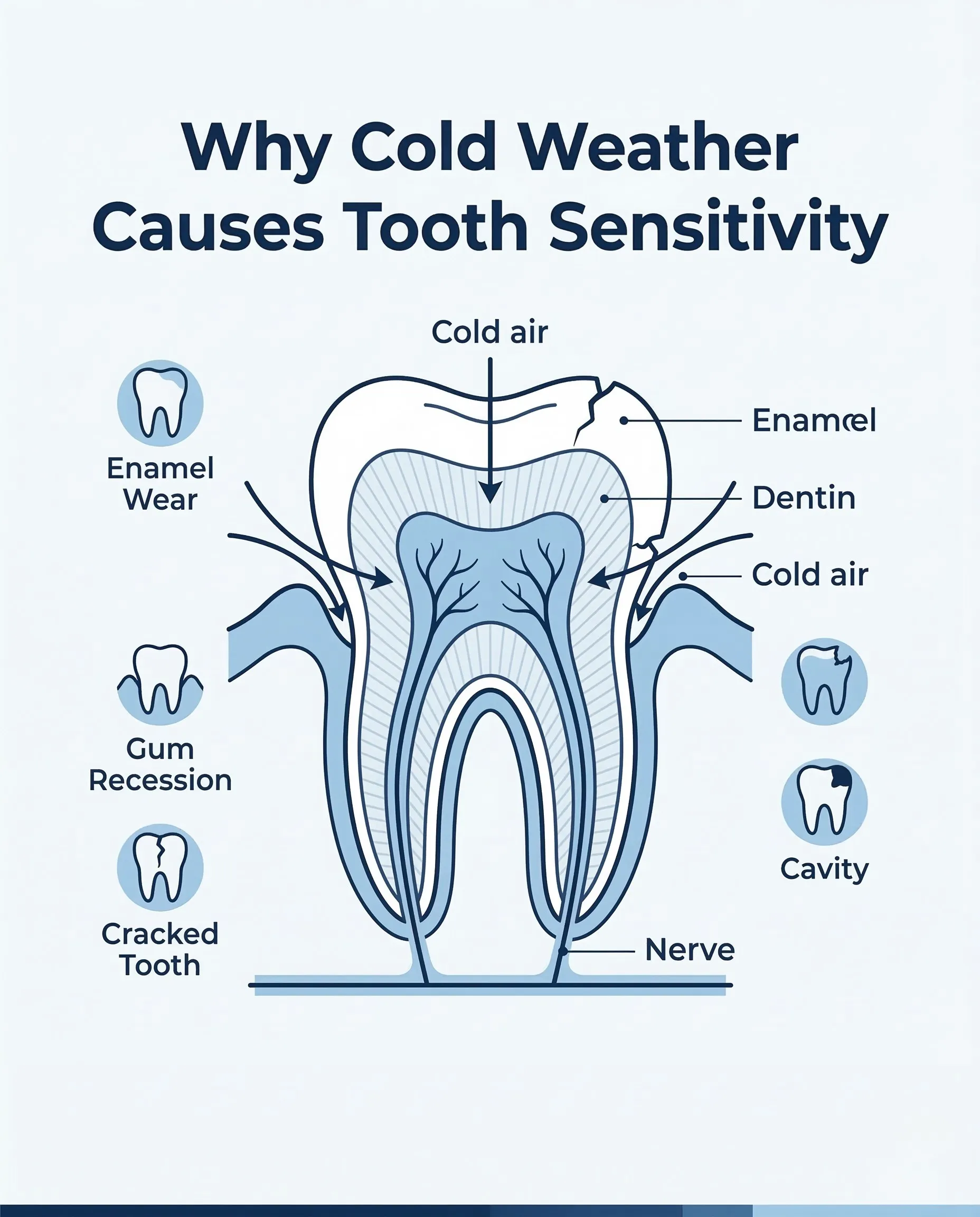
Your teeth are not solid blocks. They have layers, and the outermost layer, called enamel, acts as a protective shell. Underneath the enamel is a softer layer called dentin, which contains thousands of tiny microscopic tubes leading directly to the nerve of your tooth.
When enamel is healthy and intact, it blocks cold air from ever reaching those tubes. But when enamel wears down, or when your gums pull back and expose the root of a tooth, cold air hits the dentin directly, and that sends a sharp pain signal to the nerve almost instantly.
Think of it like this: enamel is your tooth’s winter coat. When the coat has holes in it, the cold gets in. The Canadian Dental Association notes that tooth sensitivity affects a significant portion of Canadian adults, and cold air is one of the most common triggers.
Why Is Winter in Regina Especially Hard on Teeth?
Regina is one of the coldest cities in Canada. Our winters regularly see temperatures below -25°C with wind chill pushing it well past -35°C. That extreme cold causes your teeth to actually expand and contract, a process called thermal stress.
Over time, this repeated expansion and contraction can create tiny cracks in tooth enamel. These cracks may be invisible to the naked eye, but they’re big enough for cold air to penetrate and cause sharp, sudden pain.
The dramatic indoor-to-outdoor temperature shift is especially hard on teeth. Walking from a warm office in downtown Regina out into a bitter January wind gives your teeth almost no time to adjust, and that’s often when people feel the sharpest pain.
Common Causes of Cold-Weather Tooth Sensitivity in Regina
1. Worn or Thinning Tooth Enamel
Enamel can wear down over time due to:
- Brushing too hard
- Eating or drinking acidic foods regularly (coffee, pop, citrus)
- Grinding your teeth at night (bruxism)
- Acid reflux
Once enamel is gone, it doesn’t grow back. But we can protect what’s left and treat the sensitivity.

2. Receding Gums
When gums pull back, they expose the root of the tooth. The root has no enamel to protect it, so cold air hits it directly. Gum recession is often caused by gum disease (periodontitis), aggressive brushing, or simply aging.
3. Cracked or Chipped Teeth
Even a small crack in a tooth can let cold air reach the nerve. Cracks are more common in winter because of thermal stress. If you feel a sharp, localized pain in one specific tooth in the cold, a crack is often the culprit.
4. Cavities
Tooth decay eats through enamel and exposes the sensitive dentin underneath. According to the Mayo Clinic, cavities are among the most common dental problems worldwide, and cold-weather sensitivity that’s getting worse over time is often a sign of an untreated cavity.
5. A Recent Dental Procedure
It’s normal to have some sensitivity after a filling, crown, or cleaning. If you’ve had recent dental work and your teeth are sensitive to the cold, this usually settles within a few weeks. If it persists, come back and see us.
6. Teeth Grinding (Bruxism)
Many Regina residents grind their teeth at night without knowing it, especially when stress levels are high. Grinding wears down enamel quickly, leading to cold sensitivity. A custom night guard from Downtown Dental Centre can stop the damage before it gets worse.
How Do I Know If My Cold Sensitivity Is Serious?
Not all sensitivity is equal. Here’s a quick guide:
| What You Feel | What It Likely Means |
|---|---|
| Brief sting in cold air that fades quickly | Early enamel wear or mild gum recession |
| Pain in one specific tooth only | Cracked tooth or cavity — see a dentist soon |
| Lingering pain that lasts more than 30 seconds | Possible nerve involvement — needs urgent care |
| Constant ache, swelling, or throbbing | Possible abscess — call us today for emergency care |
How We Treat Cold-Weather Tooth Sensitivity at Downtown Dental Centre
The treatment depends on what’s causing the sensitivity. Here’s what we typically recommend:
Desensitizing Treatments
We can apply a professional-grade fluoride varnish or desensitizing agent directly to the sensitive areas of your teeth. This helps block the tiny tubules in dentin that let cold reach your nerve. It’s quick, painless, and usually gives immediate relief.
Dental Bonding for Exposed Roots
If gum recession has exposed the root of your tooth, a small amount of tooth-coloured composite resin can be bonded over the exposed area to protect it from cold air.
A Custom Night Guard
If grinding is wearing down your enamel, a custom night guard made right here at our downtown Regina office will stop the damage in its tracks. Over-the-counter guards aren’t nearly as effective; a custom fit makes all the difference.
Fillings or Crowns for Cracked Teeth
A cracked or decayed tooth needs to be repaired before the damage reaches the nerve. Depending on the size of the crack, we may recommend a filling, an onlay, or a dental crown. The sooner we treat it, the simpler and less costly the fix.
Periodontal Treatment for Gum Recession
If gum disease is causing your gums to recede, treating the underlying gum disease is the most important step. Our periodontal therapy at Downtown Dental Centre addresses the root cause, so sensitivity doesn’t keep coming back.
What You Can Do at Home Right Now
- Use a soft-bristled toothbrush; hard bristles wear down enamel faster
- Switch to a toothpaste designed for sensitive teeth (look for potassium nitrate or stannous fluoride on the label)
- Breathe through your nose when outside in the cold, which reduces how much cold air hits your teeth directly
- Avoid brushing immediately after acidic foods or drinks, and wait at least 30 minutes
- Limit pop, energy drinks, and citrus juices that erode enamel over time
- Wear a scarf or balaclava that covers your mouth on especially cold days; it works
Important: At-home desensitizing toothpaste can help mild sensitivity, but it won’t fix an underlying crack, cavity, or gum disease. If your pain is getting worse, don’t wait; book an emergency appointment today.
Frequently Asked Questions
Is cold-weather tooth sensitivity normal?
Brief sensitivity to cold air is very common, especially in prairie climates like Regina’s. However, it’s not something you should just put up with. It usually means something in your mouth needs attention. A quick checkup can identify the cause and prevent it from getting worse.
Can cold weather crack my teeth?
Yes, repeated exposure to extreme temperature changes can cause tiny microfractures in tooth enamel over time. Saskatchewan winters are particularly hard on teeth because of how dramatically temperatures swing between indoors and outdoors.
My teeth are only sensitive in winter. Why?
The cold air is likely reaching exposed dentin that might not cause problems at milder temperatures. It’s also possible your enamel has cracks that only open under thermal stress. Either way, it’s worth checking out at Downtown Dental Centre.
How quickly can you help me?
We open at 7:30 am Monday through Thursday, one of the earliest start times of any dental clinic in downtown Regina. We also prioritize patients experiencing pain. Call 306-525-0116 or book online, and we’ll get you in as soon as possible.