
Dental implants are a modern way to replace missing teeth, but not all implants are the same. This leads to the important question: What are the 3 types of dental implants? The three main types are endosteal, subperiosteal, and zygomatic. This guide will break down each type to help you understand the options.
(Please note: At our general dentistry practice, dental implant services are provided not by a specialist.)
1. Endosteal Implants: The Most Common Type
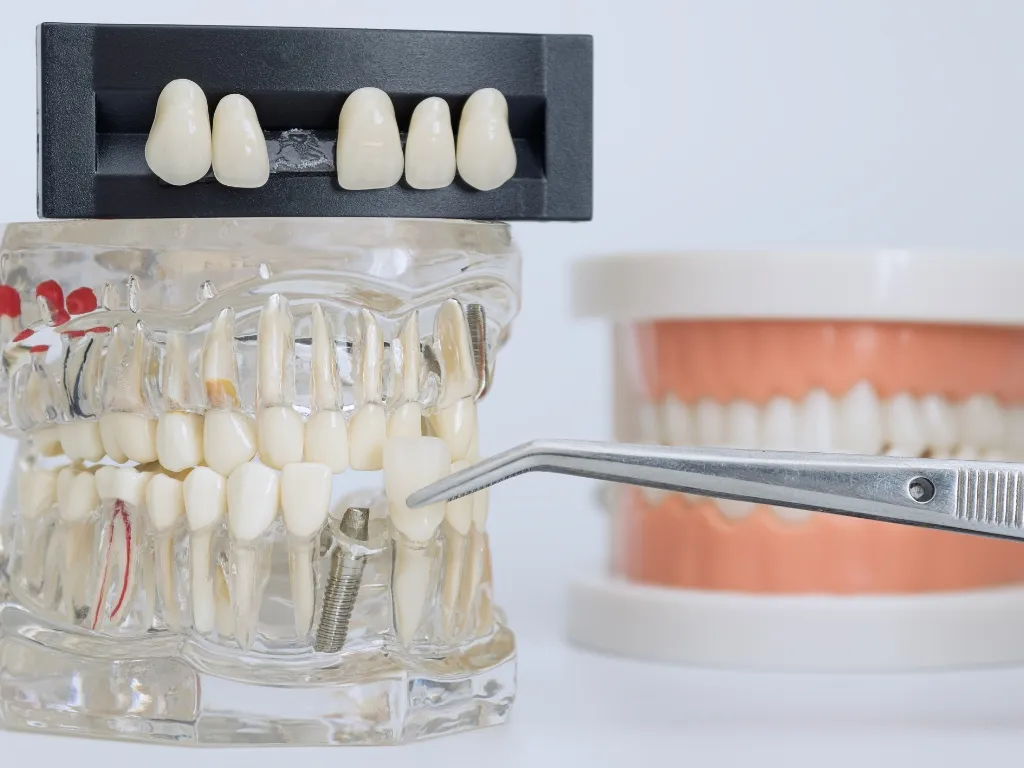
Endosteal implants are the kind that dentists use most often. When people talk about dental implants, this is usually the type they mean. They are small, screw-like posts that are typically made of titanium.
How They Work
During a simple surgical procedure, these little posts are placed directly into your jawbone. They act just like an artificial tooth root. Over the next few months, your jawbone will naturally fuse to the implant, creating a strong and sturdy base for your new tooth.
Who Are They For?
Endosteal implants are the standard choice for most people. They are for patients who have a healthy jawbone that is strong and thick enough to hold the implant post securely.
2. Subperiosteal Implants: An Alternative Option
Subperiosteal implants are a different kind of solution. They are used for people who may not have enough healthy jawbone to support an endosteal implant.
How They Work
Instead of being placed into the jawbone, this implant is a metal frame that sits on top of the bone. It rests just underneath your gum tissue. Posts are attached to this frame, and they stick out through the gums to hold the replacement teeth.
Who Are They For?
This is an option for patients who have experienced some bone loss. It is for people who may not be able to have a bone grafting procedure. It is important to know that these are used much less commonly today. A full assessment of all your dental service needs helps determine the right path.

3. Zygomatic Implants: The Most Complex Type
Zygomatic implants are the least common type of all. They are only used in very specific and complex situations. This is a highly specialized procedure.
How They Work
These implants are much longer than the other types. Instead of being placed in the jawbone, they are anchored in the patient’s cheekbone, also known as the zygoma.
Who Are They For?
This type is only used for patients who have a large amount of bone loss in their upper jaw. It is for people who cannot get traditional endosteal implants.
How to Know Which Type of Implant is Right for You
The only way to know which type of implant is right for you is to have a professional consultation. A dentist needs to check your oral health and see how much jawbone you have.
Your dentist will often use X-rays to measure your bone density. At Downtown Dental Centre, we help guide you through this process to find the right solution.
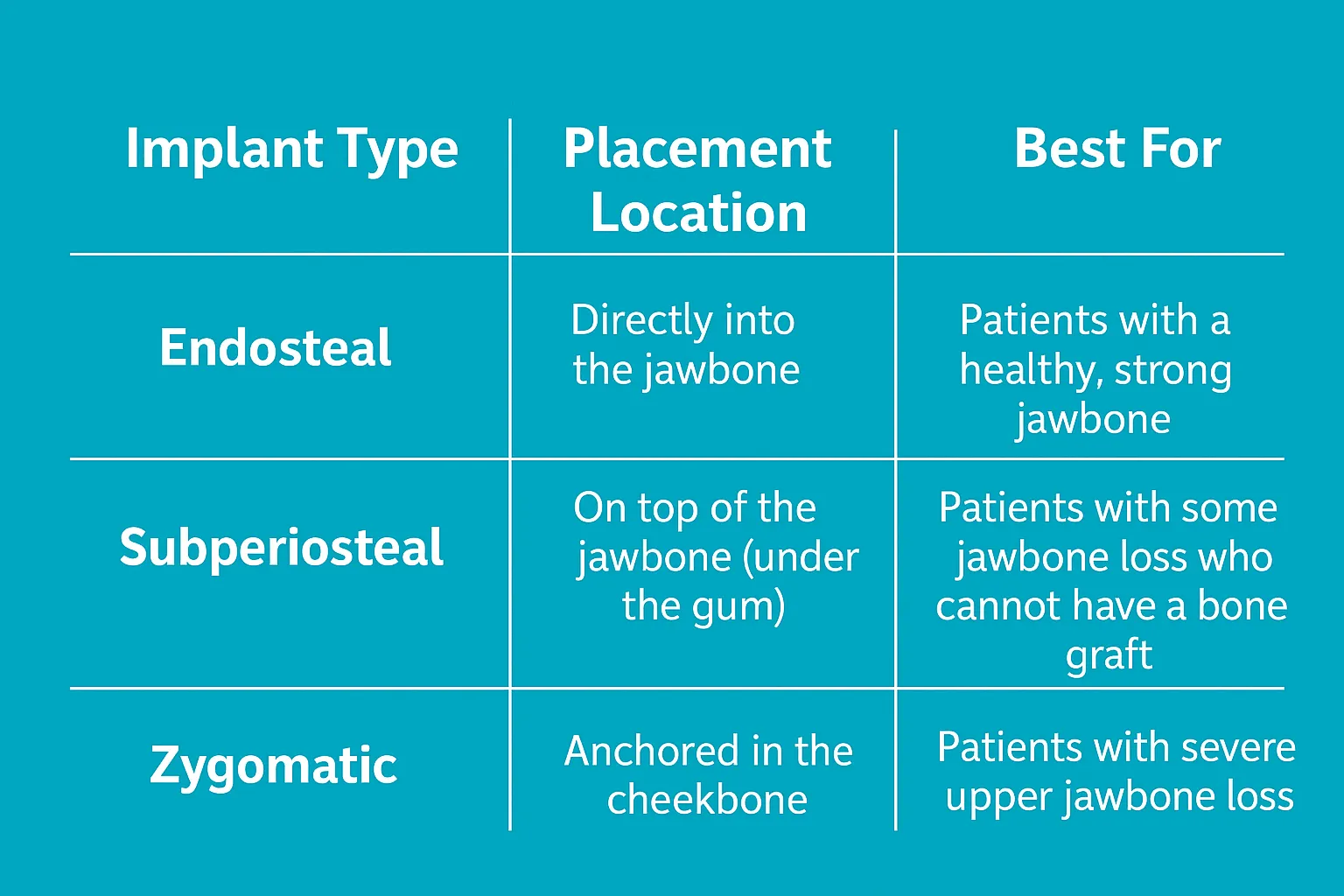
This table helps answer the question, what are the 3 types of dental implants and which is for me?
Caring for Your Dental Implant
No matter which type of implant you get, taking care of it is important. Good care is the key to making sure it lasts for many years. This just means practicing good daily hygiene, like you would with your natural teeth.
It is important to use the right tools, a topic we cover in our guide on how to choose the right toothbrush and toothpaste. If you ever feel sudden pain or notice that your implant feels loose, it is important to seek emergency dental care right away.
Conclusion: Start with a Professional Consultation
As we have learned, there are three main types of dental implants. The right one for you depends on your unique oral health and the condition of your jawbone.
So, what are the 3 types of dental implants? They are endosteal, subperiosteal, and zygomatic. The first and most important step to finding out which is right for you is to have a consultation with your dentist. To discuss your options, please contact our office.